Key takeaways
- Sewage is Category 3 black water and can carry bacteria, viruses, and parasites.
- Do not mop, vacuum, or fan a sewage backup. Those actions spread contamination.
- Porous materials that touched sewage usually have to be removed, not dried.
- Professional cleanup includes containment, extraction, disinfection, drying, and verification.
A sewage backup is a health event, not just a plumbing problem. When a drain backs up into a tub, shower, toilet, or floor drain, the water can contain waste from every fixture upstream. It soaks into drywall, baseboards, carpet, and cabinet toe-kicks. It leaves an odor that returns whenever humidity rises. And it can expose your household to pathogens that ordinary household cleaning does not reliably remove.
That is why the first step is not a mop. It is protecting people, stopping the source if possible, and getting the right equipment and protective gear on site. This guide explains what to do before help arrives, what professional cleanup actually involves, and how to reduce the chance of a repeat backup.
Why sewage backup is Category 3 water
Restoration categories describe contamination, not appearance. Category 1 is clean supply-line water. Category 2 is gray water from appliances, tubs, or washing machines. Category 3 is black water: sewage, outdoor floodwater, storm surge, and any water that has entered through a drain or the ground. Sewage backups are the textbook example.
Category 3 water changes the cleanup rules. Porous materials that cannot be cleaned and disinfected are removed. Technicians wear protective equipment and may set up containment to keep contaminated air and debris out of clean rooms. Disinfection is not a quick spray-and-wipe; it follows a sequence of removal, cleaning, and verification. Our guide to water categories explains how the three levels differ.
Health and safety risks
Sewage can carry E. coli, salmonella, hepatitis A, norovirus, parasitic worms, and other pathogens. The risk is not only from swallowing the water. Splashes can reach your eyes, nose, and mouth. Contaminated dust can become airborne when materials dry. People with weakened immune systems, young children, and pets are especially vulnerable.
If sewage has backed up into a room, keep everyone out. Do not run ceiling fans, box fans, or the central air system; they can spread contaminated droplets and dust. Do not use a wet/dry vacuum unless it is rated for hazardous material and you have the right protective equipment. A household vacuum is never appropriate for standing water.
If you must shut off water or power, do it from a dry location. Wear gloves and boots, and wash thoroughly afterward. If the backup is recurring or involves a toilet overflowing continuously, call a plumber as well as a restoration provider; the line may be blocked.
What to do before the crew arrives
- Stop using water. Do not run sinks, showers, the dishwasher, or the washing machine. Every gallon added can make the backup worse.
- Keep people and pets out. Close the door to the affected room and put a towel at the gap if the water is spreading.
- Protect clean areas. Move dry rugs, clothing, and paper items away from the affected zone. Do not move contaminated items through clean rooms.
- Document the scene. Photograph the backup, the waterline, and any damaged belongings before anything is moved. This supports your insurance claim.
- Call for professional help. Describe whether the backup is from a toilet, floor drain, tub, or multiple fixtures, and whether the water has reached carpet or drywall.
What professional sewage cleanup involves
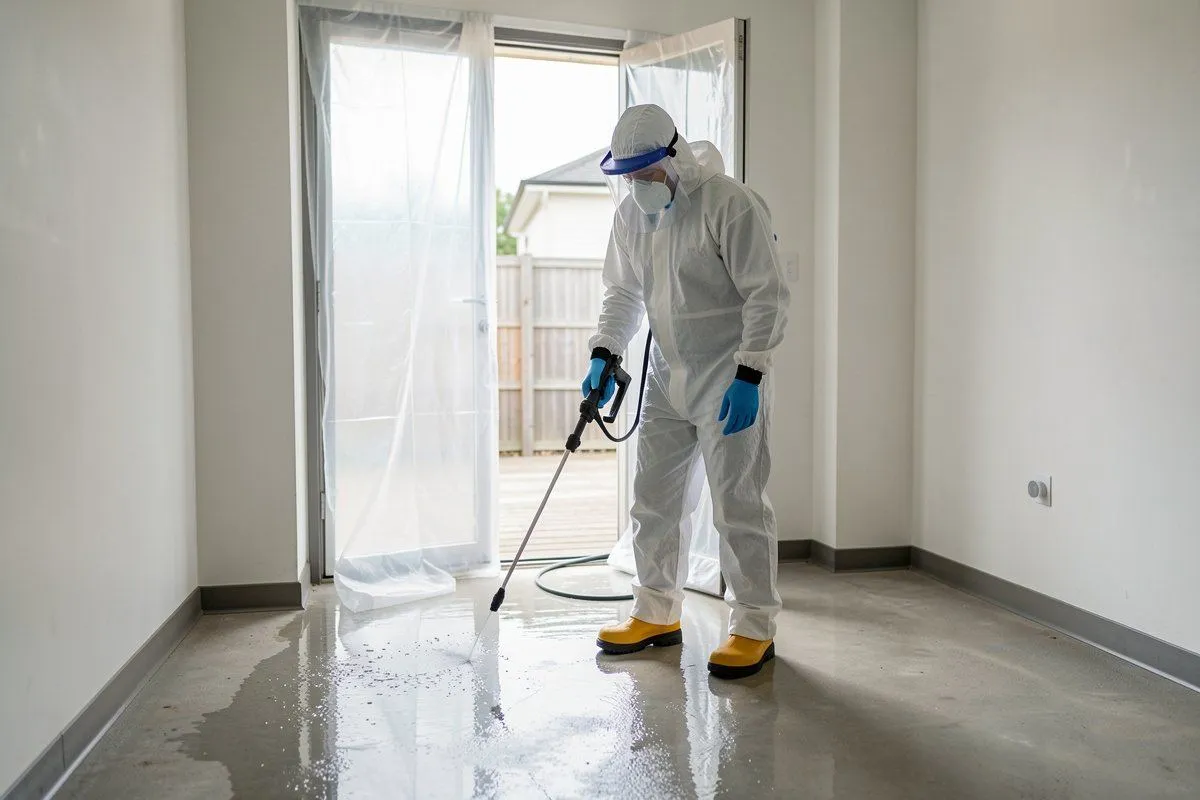
The first task is containment. Technicians may seal doorways with plastic sheeting and use negative air pressure to keep contaminated air from drifting into clean rooms. They assess the water category, check for hidden moisture with meters, and photograph the affected materials. Then they remove standing water and any porous material that cannot be saved.
Removal is often the hardest part emotionally. Carpet, pad, baseboard, drywall, insulation, and some cabinetry cannot be reliably cleaned after contact with sewage. The crew will explain what is being removed and why. Structural materials that can be saved are cleaned, treated with an appropriate disinfectant, and dried with dehumidifiers and air movers. The space is then verified with moisture readings before repairs begin.
Odor treatment is part of the job, not an afterthought. Sewage odors can linger in framing and cavities if the source is not fully removed. Technicians may use HEPA filtration, air scrubbers, and odor-control methods after cleaning. Painting over the smell does not work; the contamination has to be gone first.
What gets removed and what can be saved
| Material | Typical decision | Why |
|---|---|---|
| Carpet and pad | Remove | Porous, retains pathogens, cannot be fully disinfected |
| Drywall below the waterline | Remove a flood cut | Paper facing wicks and harbors contamination |
| Insulation | Remove and replace | Loses R-value and cannot be cleaned |
| Solid wood framing | Clean, disinfect, dry | Non-porous enough to salvage when addressed quickly |
| Tile and concrete | Clean and disinfect | Surface can be cleaned if water has not migrated underneath |
| Laminate or engineered flooring | Usually remove | Water swells the core and traps contamination |
Preventing the next backup
Most backups have a cause that can be reduced. Tree roots, grease, wipes, and collapsed clay lines are common. Have the main line inspected if backups repeat. Do not pour grease down the drain and do not flush wipes, paper towels, or feminine products, even if the package says flushable.
A backflow valve can protect the home from municipal sewer surcharge during heavy rain. It is installed on the sewer line and closes when flow reverses. Ask a licensed plumber whether your home has one and whether it is the right type for your setup. In older Louisiana neighborhoods, the city line and the home line may share aging infrastructure, so the valve is only part of the answer.
Keep floor drains clear and check the sump pump if you have one. During hurricane season, test the pump before a storm and make sure the discharge line is not clogged. If you live in a low-lying area, know where the sewer cleanout is and how to reach a plumber quickly.
When to call immediately
Call now if sewage has reached carpet, drywall, cabinets, or the HVAC system; if the backup is repeated; if water is rising; if anyone in the home has a weakened immune system; or if the affected area is larger than a small bathroom floor. Do not wait to see whether the smell fades. Sewage contamination does not resolve on its own, and the longer it sits, the more material has to be removed.
If the backup happened during a storm and the water is mixed with outdoor flooding, treat it as Category 3 and keep everyone out until the crew arrives. Do not use a generator indoors, and do not run fans through the affected area. The priority is containment, not comfort.
Frequently asked questions
Can I clean up a small sewage backup myself?
A small overflow in a toilet bowl that never leaves the fixture may be manageable with gloves and disinfectant. Once water reaches the floor, walls, carpet, or cabinets, the contamination is beyond routine cleaning. Professional containment, removal, and disinfection are the safer choice.
Does homeowners insurance cover sewage backup?
Coverage depends on your policy and any backup endorsement. Many standard policies exclude or limit sewer backup unless you added coverage. Photograph the damage, keep receipts, and contact your carrier early. Our insurance guide explains the documentation that helps.
How long does sewage cleanup take?
Containment and removal often happen on day one. Cleaning, disinfection, and drying usually take several days, and repairs follow after readings confirm the structure is dry. The timeline depends on how far the water traveled and how much porous material was affected.
Why does the smell come back after cleaning?
Odor returns when contamination remains in a cavity, subfloor, or cabinet base that was not removed or cleaned. Painting or masking the smell does not solve the source. A moisture and contamination assessment should come before cosmetic repairs.

Sewage backup? Protect your household first.
Call for a live answer and the next available cleanup crew in your area.

Practical water damage guidance written for Louisiana housing stock, humidity, storm season, and insurance realities. This site connects homeowners with independent local providers.