Key takeaways
- Most contained, clean-water losses dry in three to five days; repairs add a few more days.
- Category 3 water, saturated drywall, and wet crawlspaces take longer because material often has to come out.
- Daily moisture readings — not a calendar — decide when drying equipment is removed.
- Calling in the first hours limits how much material has to be removed and replaced.
The honest answer is a range, not a single number. A towel-sized leak under a bathroom sink may be dry in two days. A washing-machine hose that ran overnight through a hallway, a bedroom, and a closet can take a week of equipment time before drywall repairs start. In Louisiana, the range is wider than in drier states because outdoor humidity stays high, slab foundations hold moisture, and raised homes hide wet cavities underneath.
Restoration is not one task. It is a sequence: stop the source, extract standing water, remove material that cannot be saved, dry the structure, verify with meters, then repair. Each stage has its own clock. The timeline below explains what typically happens, what can add days, and what you can do to keep the job moving.
Why Louisiana jobs follow their own clock
Three local conditions shape drying time more than anything else. First, Gulf humidity: when outdoor air is already near saturation, opening windows does not help and can make the job worse. Mechanical dehumidification has to carry the load. Second, construction: slab-on-grade homes wick water sideways under tile and vinyl, while raised cottages trap damp air in crawlspaces and floor cavities. Third, storm volume: after a tropical system, every restoration provider in the region is working through a backlog, so even a small loss may wait longer for an arrival window.
None of that changes the physics of drying. Wet material has to release moisture into air that can carry it away. The equipment and the readings simply take longer when the starting conditions are humid and the building assembly is deep.
Day 1: emergency response, extraction, and moisture mapping
The first visit is the most important one. Crews identify the water source, confirm that power is safe, and classify the water. Clean supply-line water, gray appliance water, and black sewage or floodwater follow different handling rules. Extraction comes next: truck-mounted or portable units pull bulk water out of carpet, pad, hardwood seams, and low spots. In a raised home, technicians also check underneath the floor; in a slab home, they check the edges where water disappears under walls.
Moisture mapping sets the scope. Pin meters, pinless meters, and thermal imaging reveal wet pockets that are not visible. That is why a room can look dry and still need equipment. The crew photographs affected areas and records readings before any material is removed. Those baseline numbers become the reference point for every return visit.
By the end of day one, you should know the water category, the rough scope, whether any material must be removed, and how the drying plan will be monitored. If a crew promises a finish date before taking a single reading, treat that date as an estimate, not a commitment.
Days 2 and 3: the drying chamber goes to work
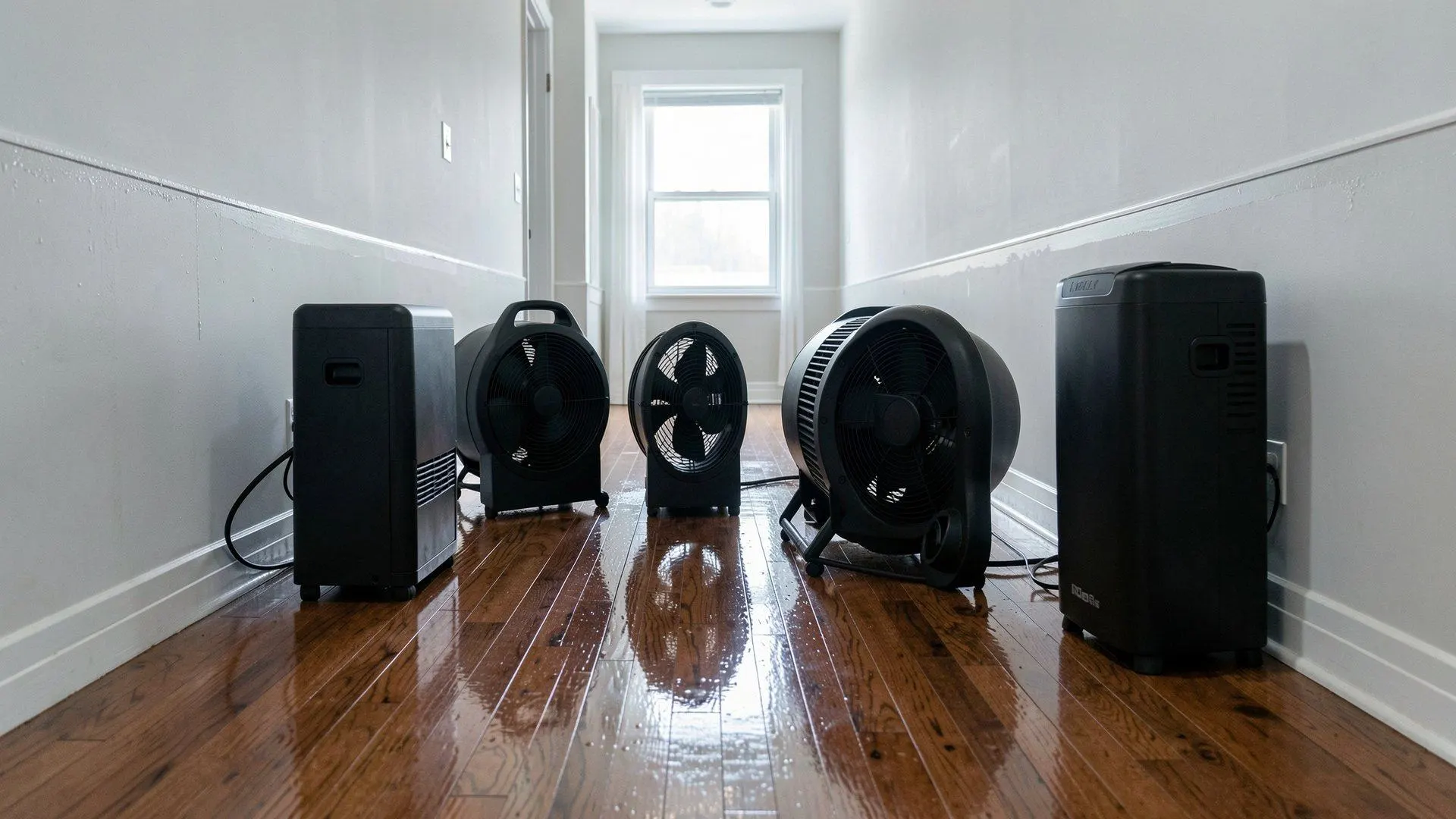
Air movers evaporate moisture from surfaces; dehumidifiers remove that moisture from the air. Together they create a drying chamber. Technicians position equipment to sweep air across wet walls, floors, and cavities rather than simply blowing it around the room. In tighter losses, they may use wall-cavity drying systems or injection mats to reach framing behind drywall or under hardwood.
This is when most homeowners notice the noise and heat. Equipment runs continuously, often for 24 hours a day, because stopping overnight lets materials reabsorb moisture. Doors and windows normally stay closed to keep humid outside air from undoing the work. Thermostats and fans are adjusted around the drying plan, not comfort alone.
A return visit within the first 48 hours usually includes new readings, equipment adjustments, and a check for material that has deteriorated. Drywall that has gone soft, insulation that has collapsed, and subfloor that has begun to swell are usually removed at this stage rather than dried in place.
Days 3 to 5: readings decide when drying ends
Most single-room, clean-water losses reach dry standard in this window. “Dry standard” means the affected material is back within a normal range for the building and the local climate — not necessarily bone dry. Technicians compare affected areas to unaffected reference areas in the same home. When framing, subfloor, and wall cavities are within range for two consecutive visits, equipment comes out.
Do not be surprised if the schedule shifts by a day. A room that was closed up, a wall cavity that was missed on the first pass, or a rainy stretch that raises indoor humidity can add time. The important thing is that the decision is based on readings and photos, not on how the surface feels.
Week two and beyond: repairs and rebuild
Drying and repair are separate phases. Once the structure is dry, repairs may include patching drywall, replacing baseboard, installing flooring, texture, and paint. Small patches can be finished in a few days. Larger rebuilds — removing a wall section, replacing cabinets, or matching original flooring — can take one to three weeks depending on material availability and scheduling.
If the loss involved contaminated water, add cleaning and verification before rebuild. Surfaces need disinfection, and porous material that cannot be cleaned has to be disposed of. That step is not optional, and it is one reason a sewage backup never follows the same timeline as a clean supply-line leak.
Drying timelines by material
| Material | Typical drying window | What changes it |
|---|---|---|
| Carpet and pad | 1–3 days, or removal | Contamination, delamination, repeated soaking |
| Drywall | 2–5 days if paper and gypsum are intact | Softness, sagging, category 3 water |
| Hardwood flooring | 3–7 days with mats or specialty drying | Cupping, finish damage, subfloor saturation |
| Concrete slab | 3–7 days or longer | Depth of saturation, coatings, tile assembly |
| Wood framing and subfloor | 3–7 days | Ventilation, cavity access, outdoor humidity |
| Crawlspace insulation | Often replaced, not dried | Loss of R-value, contamination, collapse |
What makes a Louisiana job take longer
- Category 3 water. Sewage, storm surge, and outdoor floodwater carry contamination. Porous materials usually come out, and surfaces need cleaning and disinfection before drying can be verified.
- Wet crawlspaces. Raised homes can hold water and saturated insulation below the floor. If the crawlspace is not dried, the floor above it will keep pulling moisture.
- Slab foundations. Water travels under tile and vinyl and can stay trapped at the slab edge. The visible room may be small while the wet footprint is much larger.
- Plaster and older assemblies. Plaster releases moisture more slowly than modern drywall and often needs longer, gentler drying.
- Storm demand. After a named storm, equipment and crews are stretched across the region. Early calls get earlier windows.
- Late detection. A leak that has been running for a week has already soaked framing, insulation, and subfloor — and may have started mold growth.
What you can do while the equipment runs
Keep the drying chamber closed. Do not open windows during humid weather, and do not turn off equipment to escape the noise. Move valuables and furniture out of the work zone if the crew asks, but leave wet building materials alone. Photograph anything you move. Keep children and pets away from cords, hoses, and wet floors.
If you have to stay in the home, expect higher indoor temperatures and steady fan noise. Plan sleeping arrangements accordingly. Do not run a central air handler if the ductwork or the unit itself was wet, because it can spread contamination through the house. Ask the crew before changing thermostat settings.
When to call instead of waiting
Call immediately if water is still entering, if a ceiling is sagging, if water has reached outlets or the breaker panel, if the water smells like sewage, or if the wet area is larger than a single room. In Louisiana humidity, mold can begin growing on wet drywall and paper-backed materials within 24 to 48 hours. A delay of a day can turn a dry-out into a removal and rebuild job.
If you are unsure whether the situation is urgent, call and describe it. A coordinator can help you decide whether to shut off the water, leave the home, or wait for a scheduled visit. That conversation costs nothing and often prevents the most expensive mistake: assuming a small leak is finished when it is still feeding a wall cavity.
Frequently asked questions
Can I speed up water damage restoration?
The biggest time saver is calling early. Fast extraction and prompt equipment placement limit how much material absorbs water. After that, follow the crew’s instructions: keep the drying chamber closed, do not switch equipment off, and report any new moisture or odors immediately.
Does insurance pay for the drying time?
Coverage depends on the cause and your policy. Sudden bursts and appliance failures are often covered; gradual seepage and rising floodwater usually require separate flood insurance. Documentation — photos, moisture readings, and daily logs — is what supports the claim. See our Louisiana insurance guide for the full explanation.
Why does the crew keep coming back?
Drying is verified, not assumed. Each visit produces new readings that show whether the structure is progressing or whether equipment needs to move. Returning until readings are stable protects you from hidden moisture and later mold.
Can I stay home during restoration?
Often yes for a contained clean-water loss. For sewage, floodwater, or widespread contamination, technicians may recommend staying elsewhere until cleaning and drying are complete. Our guide to when a water-damaged home is unlivable walks through the decision.

Water damage does not wait. Neither should you.
Call now for a live answer and the next available crew in your part of Louisiana.

Practical water damage guidance written for Louisiana housing stock, humidity, storm season, and insurance realities. This site connects homeowners with independent local providers.