Key takeaways
- Treat hurricane floodwater as contaminated. Do not wade in it or run household fans through it.
- Photograph and video every room before moving anything for the claim.
- Get standing water out and drying started within the first day; mold can begin in 24 to 48 hours.
- Keep receipts and a written timeline of what happened and who you called.
Hurricane flood damage is not the same as a burst pipe. The water has usually pushed in from outside, carrying silt, bacteria, yard chemicals, and sometimes sewage. It may have entered under doors, through roof damage, around windows, or up through drains. That changes both the safety rules and the cleanup plan. The first day is about protecting people, preserving evidence for insurance, and starting the work that prevents secondary damage.
This guide walks through the first 24 hours in the order that matters. It assumes the storm has passed and you can safely reach your home. If authorities have not cleared your neighborhood, stay out. No possession is worth a downed line or a contaminated street.
Hour 0–2: safety, power, and a careful walk-through
Do not enter a flooded home until you are sure the structure is safe. Look for sagging ceilings, cracked beams, shifted walls, and doors that no longer close. If the roof or a wall looks compromised, stay out and call for help. If water is near outlets, switches, appliances, or the breaker panel, do not touch anything electrical while standing in water. Shut off power at the main breaker only if you can reach it without wading.
Assume the water is contaminated. Wear boots, gloves, and eye protection if you must step inside. Keep children and pets out. Do not stir up silt or spray water with a hose; that spreads contamination. If you smell gas or hear hissing, leave immediately and call the gas utility.
Once the home is safe to enter, make a quick pass to identify the source of any water that is still entering. A roof leak, a broken window, or a failed supply line may still be adding water. Stop what you can safely stop. Do not climb onto a wet roof to tarp it yourself; that is work for trained crews after the weather clears.
Hour 2–4: document the loss before you move anything
Insurance adjusters pay for what can be proven, and hurricane claims are often reviewed weeks later. Photograph each room from the doorway, then take close-ups of waterlines on walls, soaked furniture, damaged appliances, and the source of entry. Video a slow walk-through with narration: the date, the storm, the depth of water, and what you see. Open closets and cabinets and photograph the damage inside.
Do not throw away damaged items until they have been photographed and, if possible, shown to an adjuster. If something is a health hazard or is blocking safe access, move it outside and photograph it first. Keep a written timeline: when the storm hit, when water entered, when the power went off, when you called for help, and who you spoke with.
Separate what is wet from what is dry. Move dry documents, medications, electronics, and clothing to a dry room or to a safe place off-site. Do not stack wet items on dry floors; the moisture migrates. If you have flood insurance, contact the carrier early. Flood claims are separate from standard homeowners policies, and the documentation requirements are different.
Hour 4–8: remove standing water and start drying
Standing water keeps spreading into drywall, trim, and subfloor. If the water is shallow and clearly clean, a wet vacuum or pump can help, but do not use a household vacuum in standing water. For anything deeper than a few inches, or water that smells like sewage, wait for professional extraction. Truck-mounted units remove hundreds of gallons quickly and safely.
Once bulk water is out, the clock on mold starts. Louisiana heat and humidity make wet drywall, paper backing, and insulation prime growth surfaces. Air movement and dehumidification are the defense, but the equipment has to be sized for the space. A single box fan in a closed, humid room does very little.
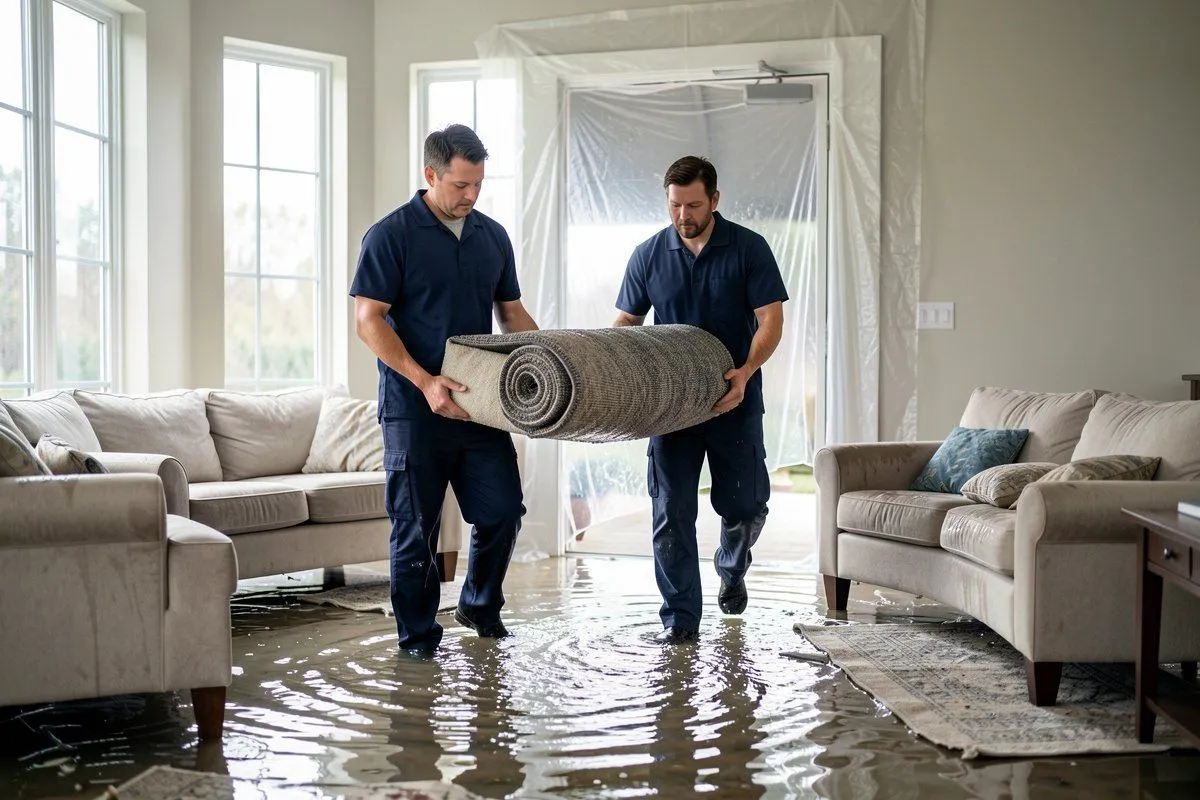
Remove wet carpet and pad if the water was contaminated. In a hurricane flood, that is the default. Carpet padding acts like a sponge and cannot be reliably cleaned after contact with floodwater. Drywall that wicked water above the waterline often needs a flood cut so the cavity can dry. Those decisions should be documented with photos before demolition.
Hour 8–24: get professional drying in place
By the end of the first day, a professional response should include moisture mapping, extraction, removal of unsalvageable material, and equipment placement. The crew should explain what is being removed and why, and record readings before and after. Ask how often they will return and how you will receive documentation for your claim.
Do not run the central air conditioner if the ductwork or air handler was submerged or contaminated. It can distribute mold and bacteria through the house. Window units and portable dehumidifiers may be used selectively, but follow the crew’s direction. Keep the work area closed off from clean rooms when containment is used.
If you are staying elsewhere, give the crew a key or access plan and a phone number. Ask for a daily update, even if it is brief. The more you understand the plan, the easier it is to make decisions about repairs and temporary housing.
Why hurricane floodwater is treated as Category 3
The restoration industry classifies water by contamination, not by how clean it looks. Category 1 is clean supply-line water. Category 2 is gray water from appliances or tubs. Category 3 is black water: sewage, outdoor floodwater, storm surge, and any water that has entered from the ground or a drain. Hurricane flooding almost always falls into Category 3.
Category 3 water requires containment, protective equipment, and disposal of porous materials that cannot be cleaned. It also changes the drying goal. You are not just drying a wet room; you are cleaning and verifying a contaminated space. That is why a flood cleanup cannot be handled with towels, a fan, and a bottle of bleach. Our guide to water damage categories explains the difference in more detail.
What not to do in the first 24 hours
- Do not wade through floodwater near outlets, appliances, or downed lines.
- Do not use a gasoline-powered generator, pressure washer, or pump indoors; carbon monoxide kills.
- Do not run household fans or the HVAC system through contaminated water.
- Do not rip out walls before photographing the damage and confirming the scope.
- Do not assume the water is clean because it looks clear. Floodwater carries contamination.
- Do not wait for a “better time” to call. Storm demand grows by the hour.
Preventing mold after the water is gone
Mold needs moisture, organic material, and time. Remove the moisture and the clock slows. Keep indoor humidity under control with dehumidification, not by opening windows during a humid Louisiana day. Dry wet cavities, not just visible surfaces. Replace insulation that was soaked by floodwater rather than trying to dry it in place.
Watch for musty odors, dark spots along baseboards, and paint that bubbles or peels. These are signs that moisture is still trapped. If mold has already started, do not dry it and paint over it. The source has to be corrected and the affected material removed or cleaned under containment. See our mold prevention guide for the warning signs.
Frequently asked questions
Will homeowners insurance cover hurricane flooding?
Standard homeowners policies usually cover wind-driven rain damage and some storm-related water entry, but rising floodwater is typically excluded. Flood insurance is a separate policy, often through the National Flood Insurance Program or a private carrier. Document everything and contact both your homeowners carrier and your flood carrier if you have one.
Can I clean up hurricane floodwater myself?
Small amounts of clean rainwater that entered through a window may be manageable, but outdoor floodwater is Category 3. It can contain sewage, chemicals, and bacteria. Professional extraction, containment, and disinfection are safer, especially if the water reached drywall, insulation, or HVAC equipment.
How fast does mold grow after a hurricane flood?
In warm, humid conditions, mold can begin growing on wet porous materials within 24 to 48 hours. The clock starts when the material gets wet, not when the storm ends. Fast extraction and drying are the best prevention.
What should I save first?
People and pets first, then medications, documents, and irreplaceable items. Photograph everything before moving it. Do not spend the first day saving furniture while standing water spreads into dry rooms; extraction matters more.

After the storm, start with a call.
Live answer across Louisiana. Tell us what the water touched and how deep it got.

Practical water damage guidance written for Louisiana housing stock, humidity, storm season, and insurance realities. This site connects homeowners with independent local providers.